
Pink Sapphire Ring
$59.00
1+ ct PINK STAR SAPPHIRE (lab) IN 0.925 STERLING SILVER RING, SIZE 8
Naturally occurring pink star sapphires are quite rare and quite expensive. However, in 1949, the Linde Air Products Company of New York patented and began producing a form of gem corundum that became known as “Linde Star Sapphire.” These laboratory-created gemstones were known for the perfection of their asterism, the phenomenon where a 6-pointed star-like pattern appears on the surface under normal light. Linde ceased production of these stones in 1974. Since then, other manufacturers have produced beautiful lab star sapphires. These stones are chemically the same as natural sapphires, and with a Mohs hardness of 9, are quite durable and a thrifty alternative to their very expensive natural cousins.
1 in stock
Related Products

Oval-Cut Semi-Crystal Opal Ring
BEAUTIFUL @ 1+ ct OVAL CUT SEMI-CRYSTAL OPAL FROM THE FAMOUS COOBER PEDY OPAL FIELD IN AUSTRALIA, SET IN 0.925 STERLING SILVER RING, SIZE 5 ½
This ring features a lovely center opal with a brilliant play of color and pattern, featuring multi-color and popular and desirable red/pink flashes. Pink sapphire accents are set on either side! Metaphysically, opals are associated with optimism, creativity, and emotional healing. They are believed to spark inspiration, enhance intuition, and promote clarity in meditation
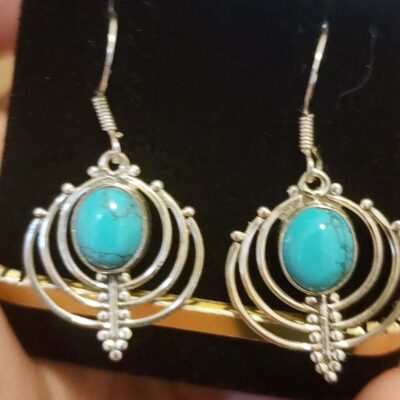
Intricate Turquoise Earrings
LOVELY AND INTRICATE TURQUOISE EARRINGS in 0.925 Sterling Silver with French ear wires
The December birthstone, Turquoise, has been prized for its lovely hue for centuries. The word turquoise dates to the 17th century and is derived from the French turquois, meaning ‘Turkish’, because it was first brought to Europe through Turkey from mines in what are now the nations of Iran and Afghanistan. Today, some of the finest Turquoise is mined in Arizona. Metaphysically, Turquoise is believed to be associated with wisdom, compassion, and forgiveness.
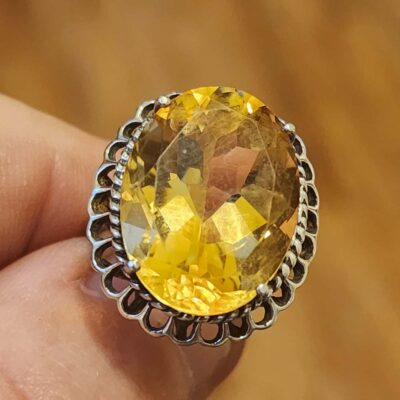
Citrine Silver Ring
AN ATTENTION-GETTING LOVELY CITRINE RING in 0.925 Sterling Silver, size 7
Very reasonably priced, richly color-saturated golden or honey-colored stones such as this one are considered the most desirable by jewelry designers. Citrine is known for its attractive color and durability, making it a popular gemstone. Citrine is also the birthstone for November. Metaphysically, Citrine is believed to be associated with positivity, prosperity, and creativity. It is believed to attract wealth and success, enhance mental clarity, and boost self-confidence.
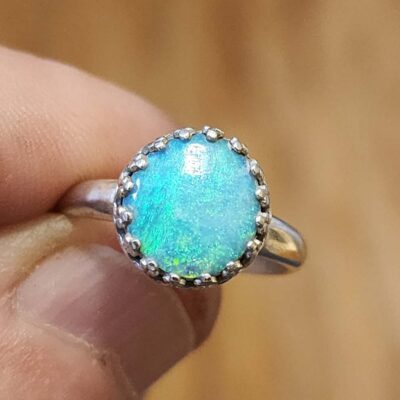
Blue-Green Opal Ring
LOVELY BLUE-GREEN OPAL FROM THE FAMOUS COOBER-PEDY OPAL FIELD IN AUSTRALIA; set in a 0.925 Sterling Silver ring, size 7
This stone features a lovely and subtle play of color and pattern, prominently blue and green flashes, as well as gold! Metaphysically, opals are associated with optimism, creativity, and emotional healing. They are believed to spark inspiration, enhance intuition, and promote clarity in meditation

Emerald-Cut Diopside Ring
GORGEOUS EMERALD-CUT CHROME DIOPSIDE IN 0.925 STERLING SILVER RING, SIZE 6.5
Chrome diopside is a translucent, deep green gemstone variety of the pyroxene mineral diopside. Most chrome diopside crystals are almost exclusively sourced from Siberia, in Northern Russia. Chrome diopside is a relatively recently discovered gemstone, first found in 1988 in Siberia. Due to the deep green color of the gem, they are sometimes referred to as Siberian emeralds. Chrome diopside’s color dramatically influences its value. More vivid, bright greens fetch higher prices, while duller, sea-green varieties aren’t as expensive. The stone in this ring has no internal flaws. Metaphysically, chrome diopside is believed to offer various benefits, including emotional healing, physical well-being, and spiritual growth.
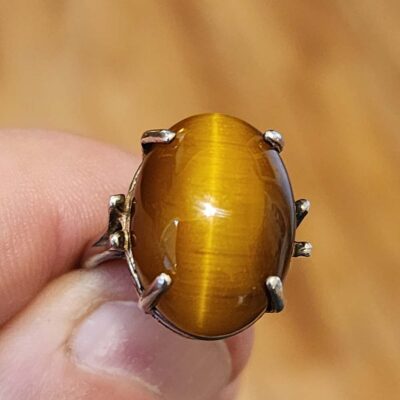
Oval Tiger Eye Ring
BEAUTIFUL HAND-CUT OVAL TIGER EYE CABOCHON SET IN 0.925 STERLING SILVER RING, SIZE 6
Tiger’s eye (also called tiger eye) is a chatoyant gemstone with a golden to red-brown color and a silky luster. Roman soldiers wore engraved tiger eye pendants to protect them in battle. Tiger Eye gems are usually given a cabochon cut best to display their chatoyance, an optical reflectance effect. Metaphysically, Tiger Eye is believed to promote mental clarity, courage, confidence, and protection. It is believed to ground the wearer, enhancing both physical and spiritual stability.
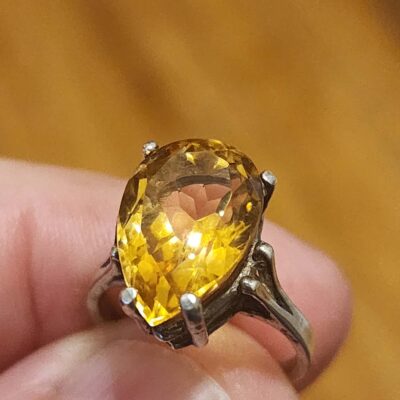
Golden Beryl Silver Ring
4+ ct BEAUTIFUL PEAR-SHAPED GOLDEN BERYL IN 0.925 STERLING SILVER RING, SIZE 6
Beryl is a gemstone of many colors. Possible colors are green, blue, yellow, pink, and red (the rarest). Well-known varieties of beryl include emerald, morganite, and aquamarine. First discovered in the African country of Namibia in 1913, yellow beryl is most commonly known as heliodor, Latin for “gift from the sun”. For those who are picky about such things, Heliodor refers to the greenish-yellow shades. Golden beryl can range in colors from pale yellow to a brilliant gold, and generally has very few flaws. Both golden beryl and heliodor are used as gems. The finest specimens, including this one, tend to be mined in Brazil. This eye-clean stone showcases a vibrant, sunny hue that radiates warmth and elegance. Metaphysically, golden beryl is reputed to be a stone of joy, clarity, confidence, and personal power. It is believed to enhance willpower and self-esteem.
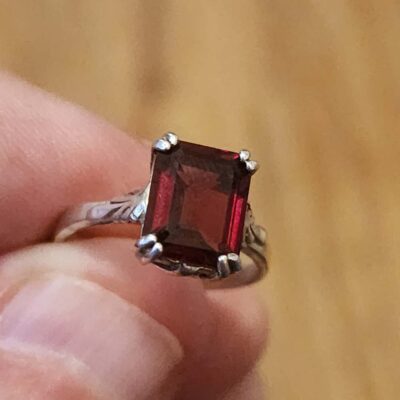
Emerald-Cut Garnet Silver Ring
1.5ct EMERALD-CUT GARNET, SET IN 0.925 STERLING SILVER RING, SIZE 8
Garnets are a group of silicate minerals that have been used since the Bronze Age as gemstones. They are known for their hardness and durability, making them popular for jewelry designers. Garnet species are found in every color, with reddish shades most common. Garnets exhibit a wide range of colors, including pyrope (red to deep red), almandine (brown to deep red), spessartine (orange-yellow to violet-red), and andradite & tsavorite (green). Garnet is the January birthstone in the US. Metaphysically, garnet is believed to symbolize hope and renewal and is believed to bring protection, strength and love.